



It feels as though more people are questioning whether a patriarchal society is working for us collectively. Online conversations about sexism, power and the expectations placed on women are making those frustrations more visible. There is anger in those conversations, and rightly so. Being expected to accept unfair treatment, make yourself smaller or carry responsibilities that others take for granted gives women plenty to be angry about. People should hear that anger and take it seriously.
Sometimes a book gives you words for something you have struggled to explain. A moment at work that seemed small until it happened again. An expectation you had accepted without considering who it served. The feeling that you were being asked to fix yourself when you were never the problem in the first place.
In our patriarchal society, people often present feminism as a bad word and attach it to a caricature of an angry, unreasonable woman who hates men for no reason. That stereotype obscures what feminism is concerned with: challenging inequality and giving women the freedom, respect and opportunities they deserve.
Why feminist books matter
That is one of the reasons feminist books matter to us at Gal Pal. They can help us understand an experience we have struggled to explain, recognise something other women have faced and question ideas we have grown up accepting.
The best feminist books for a particular reader depend on the questions she is bringing to them. You might want to understand everyday sexism, explore online misogyny or think about how an economy distributes opportunity. There is no single book that can do all of that, and there is no reading list you must complete before you are allowed an opinion.
We have chosen four starting points, bringing together Laura Bates's books and Linda Scott's work on women and the economy. They explore sexism in daily life, hatred of women online, unfair treatment by public services and the barriers women face at work and with money.
Why understanding patriarchy and sexism matters
Patriarchy describes a society in which men have traditionally held most of the power, shaping the rules, expectations and decisions that affect everyone. Sexism is the prejudice and unfair treatment people face because of their sex or gender. Understanding both helps us see why experiences that feel personal can be part of a much wider pattern.
These issues touch all of us as women, though they show up differently in our lives. They can affect whether we feel safe walking home, how seriously we are taken at work, what is expected of us in relationships and how much freedom we feel to make our own choices. They also shape the messages we hear about our bodies, our ambitions and what a woman “should be like”.
Recognising that can change how we understand ourselves. If you have been underestimated, talked over or expected to put everyone else's needs first, it can help to know that other women have faced the same things. You can begin to question the expectation instead of assuming you are the problem.
That understanding also helps us support one another and ask for change. We can name unfair treatment more clearly, listen to experiences different from our own and challenge the idea that women should simply learn to put up with it. These books give us language and examples to help those conversations.
Everyday Sexism: recognising the pattern
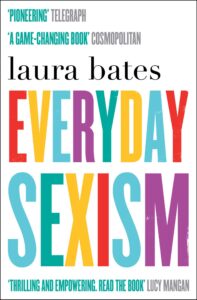
Paperback list price: £10.00. View buying options at Simon & Schuster.
Price checked 6 October 2026; retailer prices may vary.
Laura Bates's Everyday Sexism grew from the project she founded to collect people's experiences of sexism. Its subject includes experiences ranging from street harassment to workplace discrimination and sexual assault. Bringing those accounts together challenges the habit of treating each experience as an isolated event.
That is a useful starting point for a reader who has found herself explaining why something bothered her. Often, the discussion becomes narrowly focused on one comment or one incident. Was it really that bad? Could the person have meant something else? Why make a fuss?
Context changes that conversation. A remark can feel different when it sits alongside years of similar remarks, or when the person making it has power over your opportunities. You may also realise that other women recognise the pattern immediately, even if you had previously felt alone with it.
This is where reading can give you something more useful than a clever response. It can help you consider what is happening, what you want to call it and why you have felt pressure to minimise it. You do not have to turn every experience into a public argument to find that understanding valuable.
For us, that makes Everyday Sexism a meaningful place to begin. It opens a conversation about what becomes ordinary through repetition, and what we might notice when we stop accepting familiarity as a reason to dismiss it.
Men Who Hate Women: looking beyond the individual comment

Paperback list price: £9.99. View buying options at Simon & Schuster.
Price checked 6 October 2026; retailer prices may vary.
In Men Who Hate Women, Bates investigates networks of misogyny, including incel and pick-up artist communities. The publisher describes an investigation involving interviews with former members and people working against those movements. The book asks readers to consider the reach of organised misogyny and why it deserves attention.
That subject can feel far removed from the ordinary frustrations of daily life. The language of extreme online communities may be unfamiliar, and some of the ideas are disturbing. It can be tempting to assume that their ugliness makes them too marginal to matter.
The question worth bringing to the book is how ideas travel. What makes a message appealing? How does resentment become a shared explanation for someone's problems? What changes when a person finds an audience that rewards contempt rather than challenges it?
Those questions help us read beyond the most shocking examples. They also prevent an easy conclusion that identifying one public figure or one forum solves the issue. Understanding a wider culture involves looking at the stories people are offered about power, relationships and entitlement.
If you want to understand online misogyny, Men Who Hate Women is the most direct starting point in this selection. It invites you to look beyond individual comments and consider the communities and beliefs that encourage hostility towards women.
Fix the System, Not the Women: changing the question
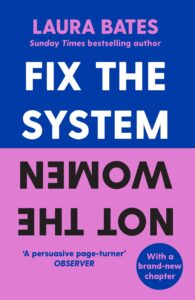
Paperback list price: £9.99. View buying options at Simon & Schuster.
Price checked 6 October 2026; retailer prices may vary.
Bates's Fix the System, Not the Women looks at sexism in education, politics, the media, policing and the courts. It asks why society so often expects women to change their behaviour while unfair rules and decisions go unchallenged.
The title itself offers a useful question to carry into daily life: what are women being asked to adapt to? Advice can be practical and still reveal an unfair expectation. Be more confident. Be less intimidating. Take precautions. Speak up, but make sure nobody feels uncomfortable when you do.
At Gal Pal, we want women to feel confident and able to make their own choices. We also want to ask why society so often expects women to work around unfair treatment. Helping someone speak up at work matters. So does asking why she keeps being interrupted or overlooked.
Looking at the bigger picture means asking who makes the rules, who benefits from them and whose needs have been overlooked. Changing those rules can do more than repeatedly telling women to try harder or behave differently.
The book belongs in this selection because it gives that broader conversation a clear focus. It is particularly relevant if you are tired of hearing that inequality would disappear if women simply became better at navigating it.
The Cost of Sexism: considering what inequality costs everyone
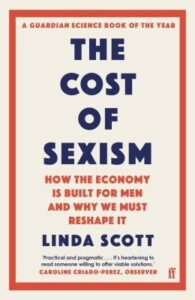
Paperback list price: £12.99. Buy from Faber.
Price checked 6 October 2026; retailer prices may vary.
Linda Scott's The Cost of Sexism looks at how inequality affects women's ability to earn, work and take part in the economy. Its earlier title was The Double X Economy. It asks what holds women back and what everyone loses when their skills and work are undervalued.
It is easy for a discussion about inequality to become confined to whether an individual woman has done well. Someone has built a company, received a promotion or reached a position of influence. People then use her success as evidence that opportunity must already be open to everyone.
Looking beyond one woman's success raises other questions. Who had access to education, money, time and support? Who was looking after children or doing the housework that allowed someone else to focus on paid work? Why do we so often take essential unpaid work for granted?
These are also useful questions for readers who run businesses, manage people or make purchasing decisions. They invite us to consider whose contribution we notice and which assumptions shape our ideas about competence. We can examine those assumptions without pretending that a single personal decision will repair an entire economy.
The Cost of Sexism asks us to think about pay, care, money and opportunity. These are everyday concerns: who can afford to work, who has time to build a business and whose contribution goes unrecognised.
The conversation between these books
Together, these books help us look at sexism from different angles. Women's stories show us what it feels like. Research helps us understand how it happens. Looking at workplaces, public services and money helps us see what needs to change.
You do not need to collapse them into one explanation. A woman who has experienced a workplace slight may want language for that experience first. Another reader may be more interested in the systems that determine what happens after a complaint. Both can find a useful entry point.
That is why we prefer a considered selection to a long list assembled simply to reach a number. Knowing which question a book addresses gives you a reason to choose it. You can then follow your curiosity rather than treating feminist reading as homework.
It also gives people something specific to discuss. Instead of asking whether someone liked a book, ask which argument surprised them, what they wanted more evidence for or whether it changed how they understood an experience. A disagreement can reveal as much as agreement when you give it enough attention.
Reading with interest and a critical eye
Liking an author's work does not require agreement with every sentence. You can find a book valuable and still question how an argument is supported. You can also recognise that a perspective has helped you while noticing where your own experience differs.
Sexism affects women across society, but our experiences are not identical. Race, disability, money, sexuality and being trans can affect the treatment we receive and whether people listen when we speak about it. Reading about other women's lives helps us notice experiences beyond our own.
Consider the date of a book as well. An investigation can remain valuable while the platforms, policies or economic figures it discusses change. When you want to make a claim about the present, look for current evidence alongside the book. Its argument may help frame the question without supplying the latest answer.
You can also take a pause. Some of these subjects involve abuse and violence, and reading about them can be heavy. There is no obligation to absorb everything in one sitting or to prove your commitment by continuing when you need a break.
Choosing where to begin
If you want to understand experiences people have told you to brush off, start with Everyday Sexism. For online misogyny, try Men Who Hate Women. Consider Fix the System, Not the Women for sexism in public services and the rules women live with. For work, money and opportunity, begin with The Cost of Sexism.
Choose the question that matters to you now. Read at a pace that lets you think about what you are encountering. You might make a note, bring a passage to a conversation or find yourself reconsidering something you had previously accepted.
At Gal Pal, that is what we want this part of The Edit to encourage: thoughtful conversations about the lives women lead, the ideas we inherit and the changes we would like to see. Books can give those conversations depth. Our own experiences and questions keep them alive.