A first foray into bondage needs less kit than the internet suggests. A blindfold, something soft to restrain with, and an agreed way to stop - that is a complete starter set, and it will take you a long way before you need anything more. The gear is the easy part. The conversation around it is what actually makes it good.
So this covers both: what to buy first, and the groundwork that turns restraint from a prop into genuine play.
Talk first, in daylight
Bondage runs on trust, and trust runs on having talked. Before anything is tied, agree what you are each curious about, what is off the table, and how you will stop. That conversation is far easier with clothes on and no immediate stakes, framed as "here is something I would like to try" rather than negotiated in the moment. Most of the nerves people expect never turn up, because a partner who has been asked properly tends to be glad of the clarity.
The safeword, and why you need one
Agree a safeword before you start - a clear, unambiguous word that means stop immediately, no discussion. The reason it is not simply "no" or "stop" is that some people enjoy playing with resistance, where those words can be part of the game. A neutral word like "red" cuts through all of that instantly. A common system is traffic lights: red for stop, amber for ease off or check in, green for keep going. For anything where speech might be muffled, agree a non-verbal signal too, such as dropping a held object. And unless you have both explicitly agreed to play with resistance beforehand, "no" and "stop" mean exactly that - while a safeword ends things instantly, whatever the game.
What to actually buy first
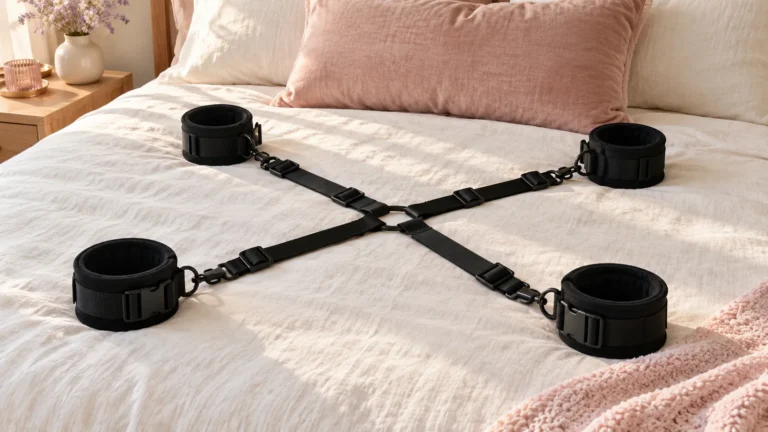
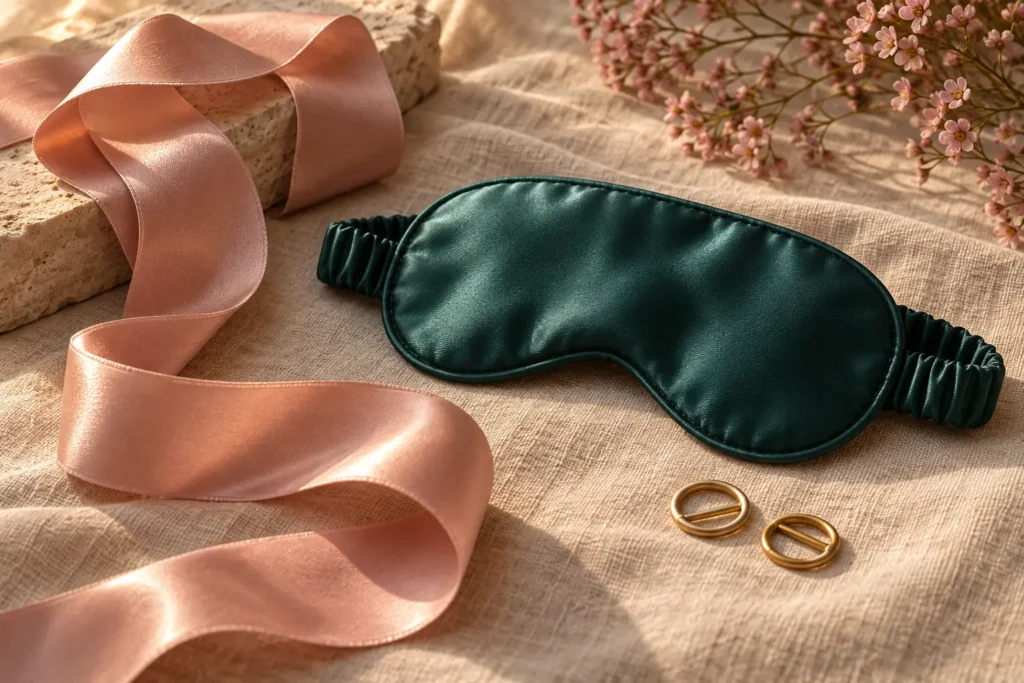
Start with three things. A blindfold is the highest-impact, lowest-risk purchase there is - removing sight heightens every other sensation and asks nothing technical of you. Soft restraints come next: purpose-made cuffs with a quick-release, or bondage rope if you want to learn to tie, though rope has a genuine learning curve. And a set of light sensory tools - a feather, something with soft texture - gives you a lot of play with very little to think about.
A starter bondage set that bundles a blindfold and cuffs together is often the sensible first buy, because it gives you the core experience in one go and lets you find out what you actually enjoy before investing further. You can always add to it once you know your tastes.
Tie safely
Two practical rules keep restraint safe. Never tie anything around the neck, and never leave a restrained person alone, even briefly. Keep restraints snug but not tight - you should fit two fingers underneath comfortably - and check regularly that hands and feet are not going cold or numb, which means circulation is restricted and it is time to loosen. If you are using rope or anything with a knot, have safety scissors within reach so you can free someone instantly. Quick-release cuffs solve most of this by design, which is why they suit beginners.
Aftercare is part of it
When you finish, take time to come back down together - warmth, water, a bit of quiet closeness. This is not a nicety tacked on the end; intense experiences can leave both people a little wrung out, and the settling afterwards is part of what makes the whole thing feel good rather than abrupt. It is also when you talk about what worked, which is how the next time gets better.
The short version
Talk first with clothes on, agree a safeword, and start with a blindfold, soft quick-release restraints and a few sensory tools. Never tie the neck, never leave someone alone, keep it two-fingers loose, and keep scissors handy with rope. Finish with aftercare. The kit is simple; the trust and the talking are what make it work.