Under-bed restraints are worth considering if you want a set of cuffs that stays anchored to the bed while you play. The useful details are the strap layout, the fit of the cuffs and how quickly you can release them. Choose a set with clear instructions for your bed, then practise fitting and opening it before using it with a partner.
What an under-bed set gives you
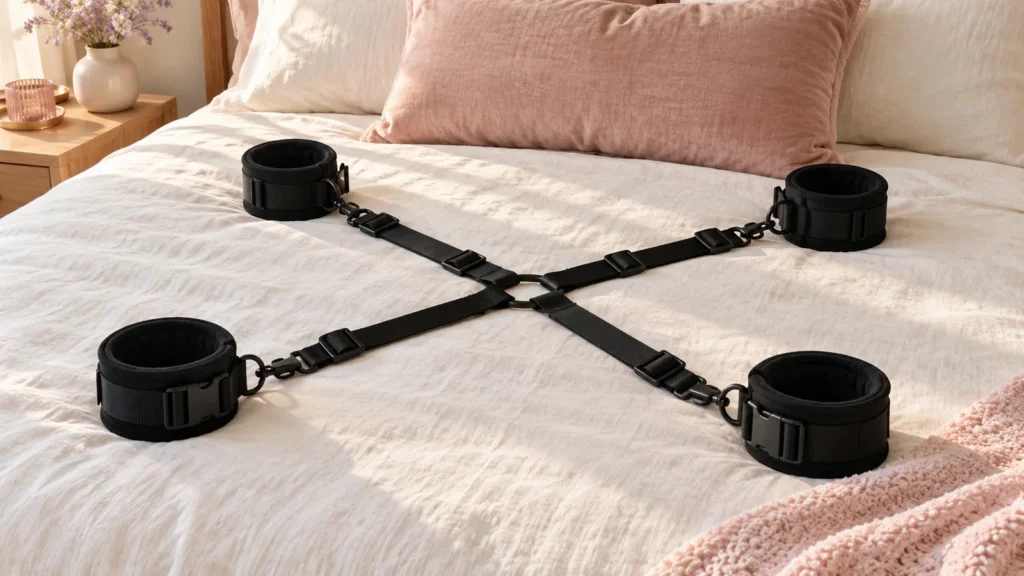
An under-bed restraint system combines straps that sit beneath a mattress with cuffs positioned around its edges. Layouts vary: some have a central connecting section, some use crossing straps, and some include detachable cuffs. Read the instructions for the particular set rather than assuming they all assemble the same way.
The appeal is the arrangement. You can choose a comfortable position, adjust the reach of the straps and keep the cuffs where you want them. A wrist-cuff set used independently has a different job, so it helps to decide whether you want an anchored setup or simply the feeling of wearing cuffs.
Our bondage starter kit guide covers the broader choice of first purchases. Here, the focus is what to check before choosing a bed restraint system. We stock the Loving Joy Under the Mattress Restraint System; check its strap dimensions and release instructions against your bed before buying. You can see our other restraints in the bondage collection.
Check the bed fit before the colour
Start with the size of your mattress and the manufacturer's stated strap dimensions. A photograph showing a double bed does not confirm that the same set will fit your mattress.
Look at how the straps are secured and adjusted. You should be able to follow the supplied layout, reach the adjustment points and release the cuffs without moving a person or dismantling the bed. If the instructions do not explain how your bed type works with the set, ask before buying.
Compare what comes in the box, too. Four cuffs, two cuffs and a strap-only system are different purchases. Clear product photographs should show the attachment points as well as the parts touching the skin.
Choose cuffs you can adjust and open easily
For a first set, we would prioritise purpose-made adjustable cuffs and an accessible release over a complicated fastening. Padding can affect how a cuff feels, but check the closure, stitching and attachment hardware as well.
SafeLink Alberta's harm-reduction guide recommends cuffs for beginners and anchored restraint because they are less likely than rope to tighten with movement and often offer quick-release options. It also stresses the need for informed partners and ongoing monitoring.[1]
Have a close look at the release mechanism before you use it. Both of you should understand how it works. A clip you can open in an empty hand may be less accessible once the cuffs and straps are in position, which is why a practice fitting matters.
Have the conversation before the fitting
Talk about the parts each of you wants to try, the areas you are happy to restrain and the things you want to leave for another time. You can agree to try wrist cuffs alone and decide about ankle cuffs later.
Agree a clear stop word and keep checking in throughout. For a first session, treat “stop” and “no” as stop, too. Consent can change while you are playing; an earlier agreement is the start of the conversation, not the last word.
A useful check-in is specific: “Is the cuff comfortable?” gives you more information than “Everything okay?” Ask about the position and pressure as well as the overall experience.
Keep the setup simple
Practise securing and releasing the set before bringing in other sensations. Keep the restrained person attended, check breathing and comfort, and release them immediately if there is pain, tingling, numbness, a change in skin colour or distress. Keep an appropriate emergency release option within reach.
SafeLink Alberta highlights overly tight restraint, impaired circulation or breathing and leaving someone alone as important risks. This article covers basic buying considerations; a restraint set is not equipment for suspension or any setup that puts pressure on the neck or restricts breathing.[1]
Once you have finished, take the cuffs off, check in with each other and discuss anything you would change. “Next time, a little more room at the wrists” is useful feedback.
Care is part of the buying decision
Read the care instructions before ordering. Fabric, coated materials and leather can need different cleaning methods, and a cuff with removable padding may have separate instructions for each part.
Check the straps, closures and stitching between uses. Store the set clean and dry, with the instructions somewhere easy to find. If a component looks damaged, replace it before using the system again.
A few things people ask
Do under-bed restraints fit every bed?
Fit depends on the strap lengths, layout and the bed itself. Check the manufacturer's measurements and instructions for your mattress and frame.
Are they a sensible first bondage purchase?
They can be a practical option for informed, consenting adults who want anchored cuffs. Choose a straightforward system with adjustable cuffs and accessible releases, and learn how it works before play.
Can I use them on my own?
Use anchored restraints with a present, attentive partner who can release you promptly. Being able to reach a release during a practice fitting does not make solo restraint a dependable setup.
What should I buy alongside them?
Start with what helps you use the set correctly: clear instructions, a suitable emergency release option and time to practise. You can decide about additional toys once the fit and setup feel familiar.
Practise the release mechanism before use and keep checking that each person wants to continue.