

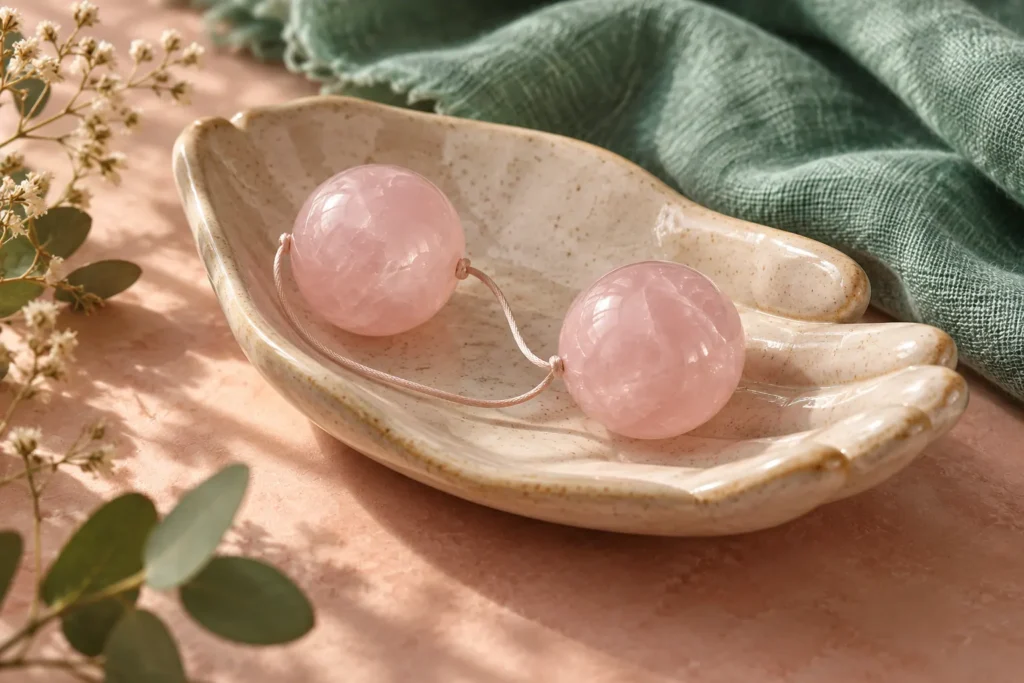
Kegel balls are weighted or moving-ball devices intended for vaginal use. They are often marketed for pelvic-floor training, but they are not suitable for every person or every pelvic-floor concern. More weight or longer wear is not automatically helpful.
Check whether training is appropriate
Pelvic-floor symptoms can have different causes. If you have pain, difficulty relaxing the muscles, prolapse symptoms, leakage or discomfort with insertion, ask a GP or pelvic-health physiotherapist for an assessment. They can advise whether exercises or a device are appropriate for you.
If you are pregnant, recovering from childbirth or surgery, or have an existing condition, get individual advice before using an insertable training device. Do not use a product description as a treatment plan.
Understand the device
Read the intended use, dimensions, weight and instructions. Check how the retrieval part is attached and how the device should be cleaned. A heavier set is not simply the next level everyone should move to.
Using a recommended device
Follow the manufacturer's instructions and any personalised clinical advice about insertion, exercises and duration. Use a compatible lubricant if advised. Stop if there is pain, pressure or discomfort, and discuss recurring symptoms with a clinician.
Do not copy a fixed daily wear schedule from a general blog. Your needs and the device's design matter. Pelvic-floor exercises include appropriate relaxation as well as contraction; repeatedly squeezing is not a universal solution.
Care and expectations
Clean and dry the device as instructed. Inspect the surface and retrieval part for damage before use.
Kegel balls should not be presented as a guaranteed way to improve orgasms, tighten the vagina or treat leakage. If your aim is pleasure rather than training, there are other toys designed for that purpose. Ask for advice when you are unsure what a device is intended to do.